
Compounded Tirzepatide vs. Compounded Semaglutide: The Key Differences
Both are clinically proven — but they work differently and suit different patients. Here's a clear breakdown to help you and your provider choose the right path.

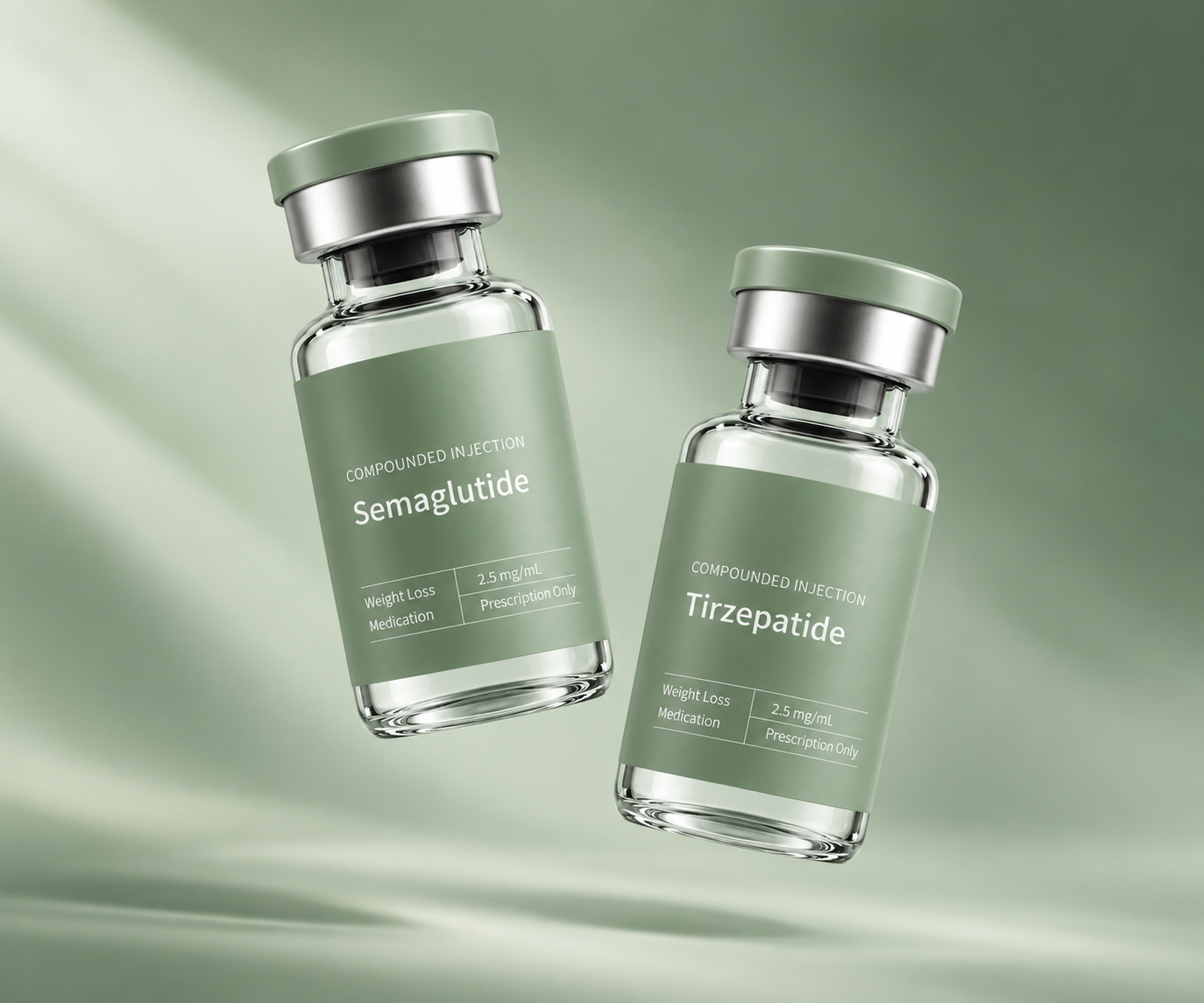
Most conversations around medical weight loss come down to just two options: Semaglutide vs Tirzepatide.
Both are effective in reducing appetite and delivering noticeable results in 4-8 weeks. However, each medication uses different pathways in the body and comes with different price tags.
But the differences don't stop there.
This post breaks down the key differences you absolutely need to know before starting your weight loss journey.
What "Compounded" Really Means
Brand-name semaglutide (e.g., Ozempic and Wegovy) and tirzepatide (i.e., Mounjaro) are FDA-approved prescription medications originally for managing Type 2 diabetes.
Semaglutide mimics Glucagon-Like Peptide-1 (GLP-1), while tirzepatide mimics both GLP-1 and Glucose-dependent Insulinotropic Polypeptide (GIP). These are natural gut hormones that suppress appetite and slow digestion, making both semaglutide and tirzepatide highly effective for weight management.

Compounded semaglutide and tirzepatide use custom-blended ingredients under strict safety guidelines, targeting the intended metabolic pathways to support weight management goals (with supervision of a licensed provider). These are formulated to interact with GLP-1 and/or GIP receptors, which play a role in managing:
- Appetite and cravings
- Satiety levels
- Supporting blood sugar balance
- Assisting with natural gastric emptying
Remember: Benefits of compounded semaglutide and tirzepatide depend on other factors like plan adherence, the patient's individual health profile, and lifestyle adjustments.
Semaglutide vs Tirzepatide for Weight Loss: What the Science Says
Both semaglutide and tirzepatide do the same basic job: sending gut signals to your brain saying you're full.
This reduces your appetite, slows digestion, and keeps you feeling satiated longer.
A fundamental difference between semaglutide and tirzepatide is the pathways they use.
Semaglutide: GLP-1 Pathway
Semaglutide targets GLP-1 hormone receptors in your body, signaling your brain that you've already eaten. This effectively curbs constant food cravings while your stomach empties at a slower rate.
The goal, of course, is to help you maintain a caloric deficit, which is crucial in any weight management program.
Tirzepatide: Dual Pathway
Similar to semaglutide, tirzepatide also interacts with GLP-1 receptors to initiate your body's "fullness" response.
But unlike semaglutide, tirzepatide simultaneously targets GIP receptors.
While GIP has milder appetite-suppressing effects than GLP-1, it enhances insulin sensitivity and improves the metabolism of dietary lipids.
Tirzepatide synergistically combines both, minimizing hunger and aiding blood sugar balance to help patients get the most out of their weight loss journey.
Semaglutide vs Tirzepatide: Weight Loss Results
For most people, choosing between semaglutide vs tirzepatide boils down to the results.
There are a number of clinical trials that demonstrate the gap in terms of effectiveness.
According to the STEP 1 clinical trial, a weekly 2.4 mg dose of semaglutide resulted in an average weight loss of 14.9% within 68 weeks. Up to 50% of participants achieved this result, whereas 70% achieved a weight loss of at least 10%.
On the tirzepatide side, the SURMOUNT-1 clinical trial revealed more substantial results over a 72-week period. The results varied depending on dosage groups:
- 5 mg: 15%
- 10 mg: 19.5%
- 15 mg: 20.9%
To put these numbers in perspective, a 230-pound patient could lose roughly 35 pounds with semaglutide — or 48 pounds with the maximum dosage of tirzepatide at 15 mg per week.
Which Option Fits Your Goals?
Tirzepatide will help you achieve better results if your goal is to maximize weight loss while managing severe metabolic resistance.
On the other hand, semaglutide is a rigorously tested alternative for patients preferring steadier and more controlled progress.
Apart from the potential end results, semaglutide and tirzepatide also differ in two areas: side effects and pricing.
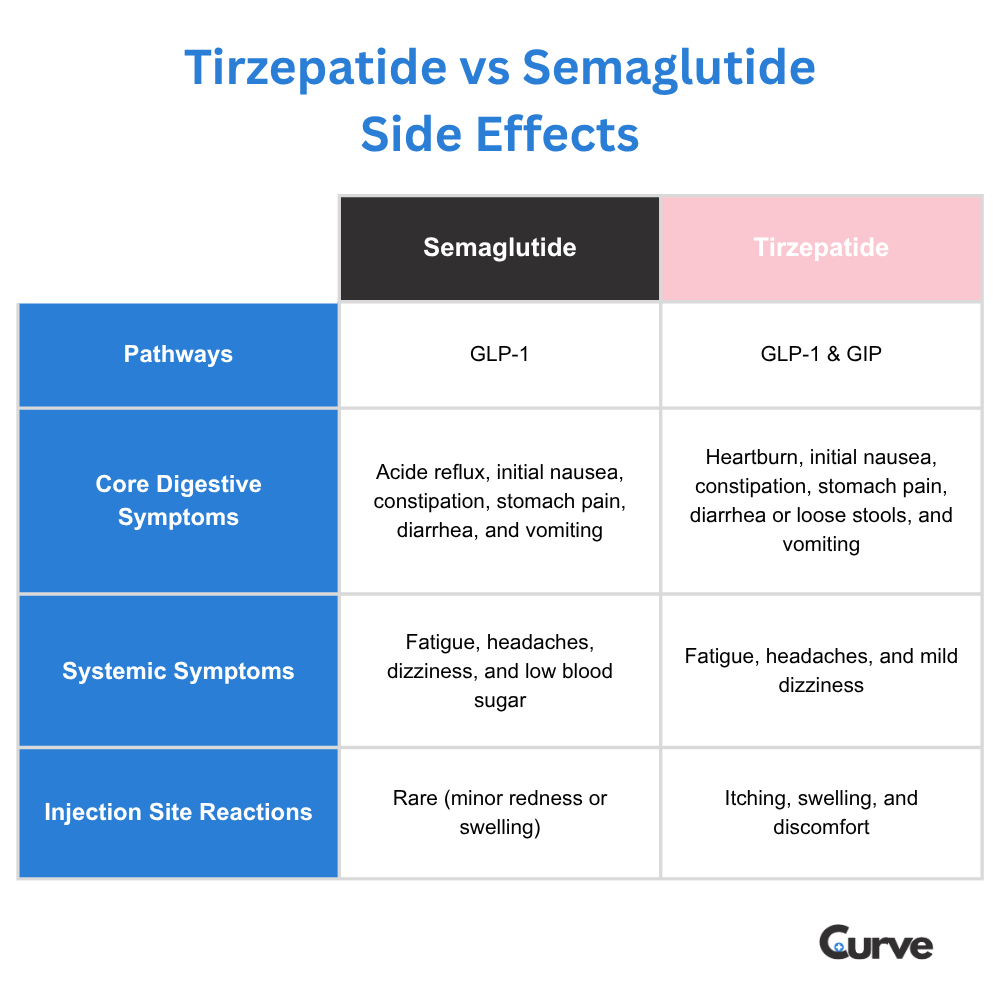
Tirzepatide vs Semaglutide Side Effects
Both semaglutide and tirzepatide share similar but not completely identical side effects. This primarily includes gastrointestinal issues (e.g., belching, diarrhea, and acid reflux) along with less common symptoms like fatigue and dizziness.
Semaglutide Side Effects
Since semaglutide focuses on the GLP-1 pathway, a major cause of side effects is delayed digestion. This includes:
- Acid reflux
- Initial nausea
- Constipation
- Stomach pain
- Diarrhea
- Vomiting
- Low blood sugar
Some patients may also experience fatigue, headaches, and dizziness as their body adjusts.
Tirzepatide Side Effects
While tirzepatide's dual pathway activates both GLP-1 and GIP receptors at once, head-to-head comparisons show a very similar side effect profile to semaglutide.
For most patients, the following side effects are present:
- Diarrhea or loose stools
- Heartburn
- Initial nausea
- Vomiting
- Stomach pain
- Constipation
Adverse headaches, fatigue, and mild dizziness may also be experienced during the adjustment period. In some instances, adverse reactions at the injection site (e.g., itching, swelling, and discomfort) may also be present.
It's worth noting that neither semaglutide nor tirzepatide is inherently harsher than the other. However, the dual action of tirzepatide may trigger a more turbulent adjustment phase for patients with a sensitive GI tract.
Cost and Pricing Transparency
You can't ignore the out-of-pocket cost when choosing a weight-loss treatment.
Here's a quick breakdown of the pricing of brand-name semaglutide and tirzepatide products (one-month supply):
Brand-Name Semaglutide (Without Insurance)
- Wegovy: Around $1,350 to $1,630 per month
- Ozempic: Around $950 to $1,200 per month
- Rybelsus: Around $1,025 to $1,240 per month
Brand-Name Tirzepatide (Without Insurance)
- Zepbound: Around $1,085 to $1,270 per month
- Mounjaro: Around $1,080 to $1,300 per month
Compounded Semaglutide and Tirzepatide Costs
When it comes to compounded semaglutide and tirzepatide products, telehealth platforms like ELUVI offer far more accessible options.
In addition to the products themselves, ELUVI offers all-in-one packages that include consultation, 24/7 clinical support, provider monitoring, and free shipping.
ELUVI's semaglutide treatment plan starts at $99 per month, while the tirzepatide plan costs only $135 per month.
See our treatment options here.
The Verdict: Semaglutide vs Tirzepatide
Remember, choosing between semaglutide and tirzepatide isn't about which medication is "better."
It's all about finding which product matches your metabolic profile, sensitivity, and budget.
Choose semaglutide or compounded semaglutide if you have a sensitive lower GI tract and prefer treatments with a more established track record. Otherwise, choose tirzepatide or compounded tirzepatide if you want to maximize your weight loss — or, if your progress with a single-hormone (GLP-1 only) treatment has plateaued.
Begin Your Program with ELUVI
At ELUVI, we make weight loss treatment plans accessible and personal.
You start with a 5-minute health questionnaire to establish your health baseline, which will be reviewed by a board-certified medical provider within 24 hours. This ensures you receive a highly personalized treatment plan tailored to your physical attributes and medical history.
Ready to start your journey?
Join thousands who have already lost weight with Try Curve.
Plans start at $99/month all-inclusive, no insurance needed.